
Get Ready For Westminster
Your Guide to the 2026 Westminster Kennel Club Dog Show
BY JESSICA BRAATZ
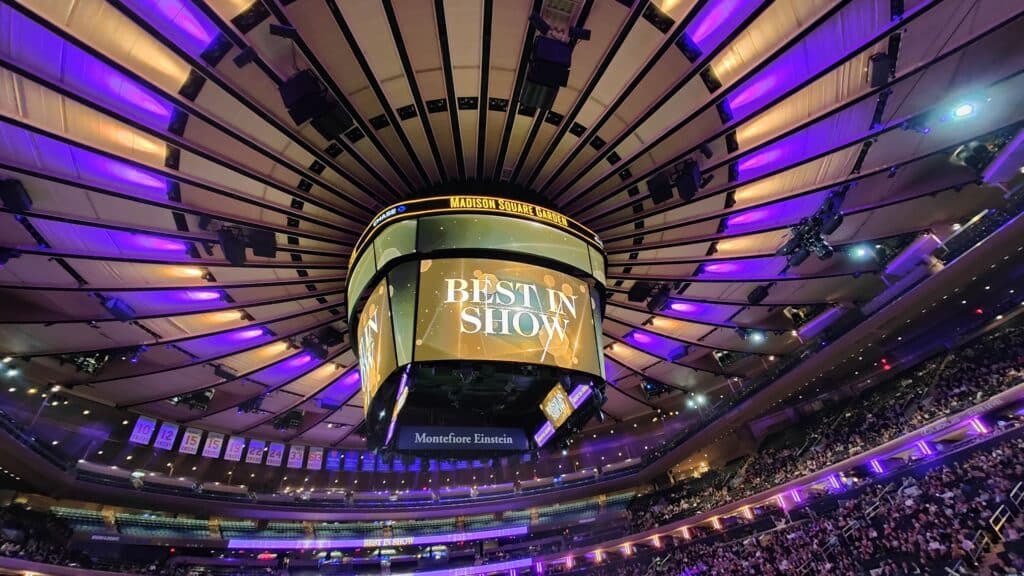
The crowd erupts with thunderous applause as veteran announcer Michael LaFave’s voice booms, “May we have the Hound Group in the ring, please!” One after another, exhibitors stream in, filing to their distinct yellow boxes, and waiting with bated breath for the judging to commence. This year, Mr. Michael Canalizo of Mill Neck, New York, will be the first judge to step onto the floor of “The World’s Most Famous Arena” and select a group winner. His decision will be followed by the judging of the Toy, Non-Sporting, and Herding Groups that evening, and Sporting, Working, and Terrier Groups the following night. Long before those exhibitors, judges, and dogs ever step onto the iconic green carpet, however, years of meticulous planning and preparation have taken place. The path to the Westminster Kennel Club Dog Show is defined by relentless work and dedication, shaped long before the competition begins.
The Beginning
Exhibiting at Westminster first begins in the whelping box. Here, breeding dogs is an artform with experts spending endless hours researching pedigrees, lineage, canine health, and temperament, all to choose the best match for their dog. The ultimate goal of every litter is breed preservation and improvement through the breeding of healthy puppies that conform to the breed standard. At around eight weeks of age, the breeder will choose their puppy, and their journey begins.
Succeeding in a Conformation show goes much beyond a dog’s structure. When a judge is evaluating the dog, they also consider temperament, grooming, and physical condition. A breeder will socialize their puppy for months, ensuring its budding temperament is rock solid, and that the young dog is ready for anything. Then, they will travel to shows, all the while maintaining proper coat care and physical muscle condition. Depending on the breed, both of these can be massive commitments.
For a dog to compete at Westminster, they must first become a champion before entries close. For 2026, entries closed on November 21, 2025, so all entered dogs will have been champions of record by then. For a dog to achieve an AKC Championship, they must win a total of 15 points, including two major wins, which can be a lengthy process. They must win under at least three different judges and defeat enough dogs to acquire the necessary points. Depending on the individual breed and region, this can be immensely challenging in itself.
An AKC Championship is no easy feat, and there are many different paths taken to achieve it. Many breeders show their own dogs. Many champions are also dogs that breeders have sold to individuals who are just being introduced to the show world, or are seasoned owner-handlers. Many also choose to send their dogs out with professional handlers. These handlers show dogs full-time as their profession, and have spent many years honing their craft in handling, grooming, and caring for people’s beloved pets. This is often the easiest route for those owners and breeders who want their dogs shown, but cannot commit the time to it themselves. When you tune in or attend the show in person, expect to see a mix of all of these exhibitors: breeders, owner-handlers, and professional handlers.
Once a dog achieves its championship, it is time to enter the show. Dogs and exhibitors travel from all over the world to compete at the Westminster Dog Show, and due to space and time constraints, the total Conformation entry is limited to 2,500 dogs. The Top Five Breed point-ranked dogs of each breed receive an invitation, which is a guaranteed spot within the 2,500 if they choose to enter. The breed’s National Specialty Winner also receives an invitation to compete. After submitting their entries, exhibitors anxiously await the receipt of their “golden ticket,” confirming their spot in the show.
Once an exhibitor receives their entry confirmation, their work is just beginning. Now, they must continue to perfect their dog for the show. They will spend hours grooming, trimming, and conditioning coat, while also exercising their dogs amply. This feat becomes even more challenging as exhibitors approach Westminster, with many facing harsh winter conditions. These conditions can also make travel a challenge. Exhibitors traveling via air often face air embargos prohibiting the flying of dogs, and those driving can experience icy and snowy conditions. Most non-local exhibitors choose to start their journey to the show on Thursday or Friday before, leaving them ample time for any travel delays or difficulties they may encounter.
The Arrival
Upon arriving in New York City, many choose to stay at The Westminster Kennel Club’s host hotel, The New Yorker, for convenience. Expect a total takeover of the hotel, with longtime friends, exhibitors, and judges reuniting in the lobby, dogs walking everywhere, people waiting in line for shuttles, and many making the most of their trip, sightseeing in the greatest city in the world.
When it comes time to venture to the show, most exhibitors use The Westminster Kennel Club’s shuttles, which operate between The New Yorker and the Jacob K. Javits Convention Center. These shuttles are for exhibitors only, but are open to those staying anywhere in Manhattan. They run from 5:30 a.m. through 8:00 p.m. Saturday and 5:30 a.m. until 12:30 a.m. Monday and Tuesday. The exhibitors you see on the first morning shuttle are often the ones you will see on the last shuttle of the night. Exhibitors will also have the opportunity to commute to the Javits Center the evening before they compete to unload all of their benching equipment.
The benching area sets Westminster apart and is deeply representative of its historical roots. The average dog show has long left benching behind, yet there is so much charm in Westminster’s. With benching, dogs are required to be at the show between 11:00 a.m. and 4:00 p.m. in a specific, pre-determined grooming spot. Many exhibitors will arrive earlier, but this window requires all entered dogs to be present and available for the general public for at least those set hours. These benches are organized by breed, and there you will find dogs lounging on tables, enjoying attention, or relishing some well-deserved rest. As a spectator, this is a unique opportunity to interact with all of the day’s breeds and meet knowledgeable breeders, owners, and handlers. Most handlers will be more than happy to introduce you to their dog, as long as you ask first.
The Show
On the day of the show, exhibitors will arrive early, offering both them and their dogs time to settle into the bustling environment and locate their rings. Ring preparation varies entirely by breed. Many will have wash bins of soap and water, and will be bathing dogs on grooming tables; others will be using industrial forced-air dryers to perfect their dog’s coat, or doing some last-minute trimming. Experiencing the benching area and watching all of these individually tailored grooms is just as special as watching the show itself. It is an opportunity to watch the masters at work in a way you may not typically see or expect. There is so much preparation and diligence that goes into those few minutes of ring time, and they are just as important as any flawless presentation may be.
For most exhibitors, their joy of the day will be in experiencing the magic of Westminster firsthand, but a select few will emerge with a Best of Breed rosette in hand. Winning the Breed at Westminster is an event in itself. Immediately after the selection, the judge, dog, and handler will take a moment in front of the ringside camera, showcasing the best of each breed to those watching from home. Then, professional photographers, like John Ashbey, enter to take a win photo and immortalize the win. In addition to the rosette, the handler is also awarded a medallion and a large white packet. This packet contains all of the information regarding competing at the iconic Madison Square Garden. Shuttles run from 3:45 p.m. through 12:30 a.m. from the Javits Center to Madison Square Garden and back, and exhibitors must journey from the day judging to the Group competition, along with all of their grooming equipment and their winning dog.
Similar to the Javits Center, the Group competition is also benched. Each exhibitor is required to be on their bench by 6:30 p.m. and remain for the evening. They will bring all of the required grooming equipment, other than a table, which Westminster provides. Exhibitors can be accompanied by an assistant as well in both the benching area and the ready ring, until they take to the floor. Once in the ring, handlers will not have any access to the ring edge or assistants, so they must take all required items with them. If you look closely, each handler places these tools inside their breed’s yellow box on Madison Square Garden’s floor. Most handlers will bring in spray bottles of water, brushes, and a few other grooming tools, depending on their dog’s breed and individualized needs.
The Groups are judged in halves, with a short break in between. After the completion of the last dog’s exam, all of the Group’s participants line up, offering the judge one final look at some of the world’s best dogs. The judge then has the most difficult task of selecting a winner, first making a “cut” in the group and selecting eight total dogs to work with. They will send these dogs around the ring before making their final selections. The cut symbolizes more than just an opportunity to have another, more refined look at their favorites. It is also a nod to the dogs’ quality and a recognition of their appreciation for those final eight competitors. This process continues throughout Monday, until four dogs reign as Group winners. The same process takes place on Tuesday, with the addition of Junior Showmanship Finals.
Dreams Realized
At the end of Monday evening, only four dogs advance to Best in Show, and three more join that list on Tuesday. By Tuesday night, a new ultimate Best in Show winner will be crowned, yet there is way more than just one winner of the Westminster Kennel Club Dog Show. There is a Masters Agility Champion, a Masters Agility All-American winner, a Flyball Tournament winner, a Best Junior Handler, three additional Junior Showmanship placements, eight total Junior Showmanship Finalists, five Agility division winners, seven Group winners, 21 additional Group placers, and over 200 Best of Breed winners. Beyond that, many more dogs will win Best of Opposite, Select, and Award of Merit awards. Countless dreams will come true with awards won, but numerous more dreams will be achieved by simply attending the Westminster Kennel Club Dog Show and experiencing the magic firsthand. When it comes to Westminster, there’s only one.